Claude’s Ambitious Upgrades
On October 21, 2025, Anthropic announced a series of improvements to its AI model Claude, with the core goal of enhancing its application capabilities in life sciences to accelerate scientific progress. The ultimate aim is to achieve the ambitious goal of completing a century’s worth of scientific advancement in just ten years.
In a podcast released today, Anthropic’s life sciences research executives Jonah Cool and Eric Kauderer-Abrams elaborated on the company’s vision for AI in life sciences research. They aspire to elevate Claude to the level of a “super research assistant,” assisting scientists at every stage of their research tasks.

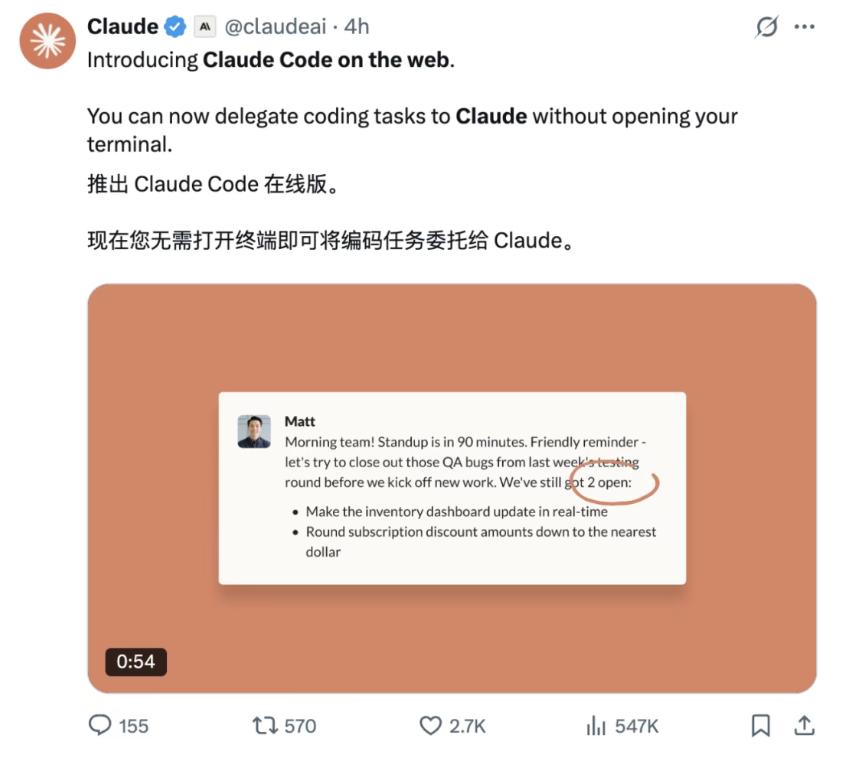
Additionally, Anthropic introduced a web version of its AI programming tool, Claude Code, allowing users to delegate programming tasks directly through a browser without relying on local terminal environments. This feature supports cloud-based parallel development, real-time progress tracking, and secure sandbox execution, further lowering the barrier for non-programming users.
Notably, the popular Claude Code has transcended programming tasks and is being widely adopted as a “general intelligence agent” in the life sciences sector. Anthropic claims that Claude Code can be directly utilized for drafting papers, efficiently completing literature reviews, and intelligently managing research projects, making previously time-consuming and cumbersome processes much easier.
Previously, scientists and pharmaceutical companies primarily used Claude for single tasks like coding, paper summarization, or sales support. Anthropic aims to enable Claude to support the entire process in life sciences, from early research to commercialization, becoming a valuable assistant for researchers, clinical coordinators, and regulatory affairs managers.
To achieve this goal, Anthropic has first enhanced the foundational capabilities of its core model. According to their published data, the latest generation model, Claude Sonnet 4.5, has performed exceptionally well in various life sciences benchmark tests, marking it as the first model systematically trained in scientific disciplines.
In the Protocol QA test, which assesses laboratory protocol understanding and application, Claude Sonnet 4.5 scored 0.83, surpassing the human baseline score of 0.79 and outperforming the previous Claude Sonnet 4’s score of 0.74. The new model also showed significant improvements in the BixBench bioinformatics task evaluation compared to its predecessor.
Enhancing Scientific Practicality
Anthropic is enhancing Claude’s scientific practicality through three main directions: introducing scientific platform connectors, integrating “agent skills,” and providing a specialized prompt library for life sciences.
Integrating Scientific Tool Ecosystem
The new series of connectors launched by Anthropic aims to enable Claude to directly access and operate professional scientific tools and databases, allowing for deeper integration into research workflows. These connectors cover a wide range of current mainstream scientific tools and databases.
With these connectors, Claude can provide evidence-based scientific answers, create compliant research graphs, and perform data analysis tasks.
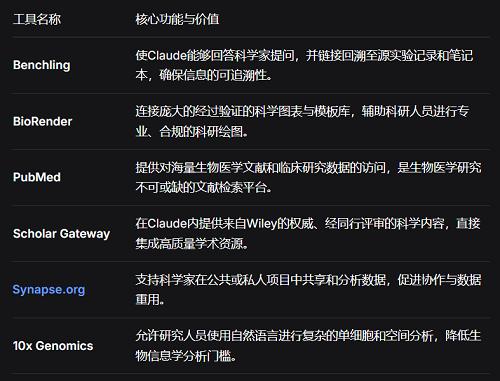
These scientific-specific connectors will complement existing general tools (such as Google Workspace and Microsoft products) and data analysis platforms (like Databricks and Snowflake).
Introducing Skills for Standardized Operations
Anthropic’s recently released “agent skills” feature is positioned as a key aspect of scientific applications. Skills are preset packages containing instructions, scripts, and resources that allow Claude to follow established protocols when performing specific tasks, ensuring consistency and predictability in operations.
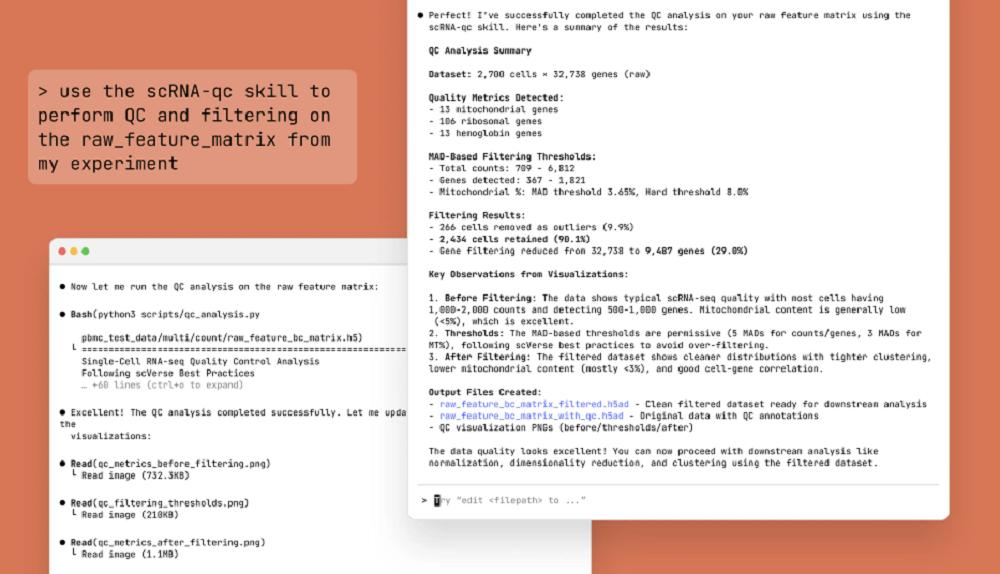
The company is developing the first batch of scientific skills, such as the “single-cell-rna-qc” skill based on scverse best practices, which automates quality control and filtering of single-cell RNA sequencing data. Anthropic also encourages scientists to create custom skills based on their needs.
Providing a Dedicated Prompt Library
According to Anthropic, the enhanced Claude now supports various life sciences tasks, including conducting literature reviews and formulating testable hypotheses. With the Benchling connector, it can draft research proposals, standard operating procedures, and generate research plans.
Claude can also handle more complex tasks, such as processing genomic data in Claude Code and presenting results in multiple formats, or assisting in drafting and reviewing regulatory submission documents while compiling compliance data.
To help users get started quickly, Anthropic is creating a dedicated prompt library for these tasks.
Anthropic has revealed that many existing clients and partners are applying Claude to real-world scientific tasks. Furthermore, through the “AI for Science” initiative, the company is providing free API credits to leading laboratories engaged in high-impact research projects, aiming to promote frontier exploration and identify new application scenarios for Claude.
Conclusion: Claude Enters the Life Sciences Arena
Following its success in programming, Anthropic has now ventured into the life sciences vertical. Through specialized and tool-oriented upgrades, Claude is showcasing the immense potential of AI’s deep integration in vertical fields.
Life sciences have already become a significant research direction for scientific intelligence (AI for Science), but previous AI tools focused more on specific stages. When large models can understand experimental protocols, operate professional platforms, and adhere to research norms, they are poised to transcend mere auxiliary tools and become true research “colleagues.”
Comments
Discussion is powered by Giscus (GitHub Discussions). Add
repo,repoID,category, andcategoryIDunder[params.comments.giscus]inhugo.tomlusing the values from the Giscus setup tool.