The Man Behind Qwen and Seedance
There is a person named Zhou, who has a background with Alibaba and is closely related to Lin Junyang, and his products have recently gained significant popularity.
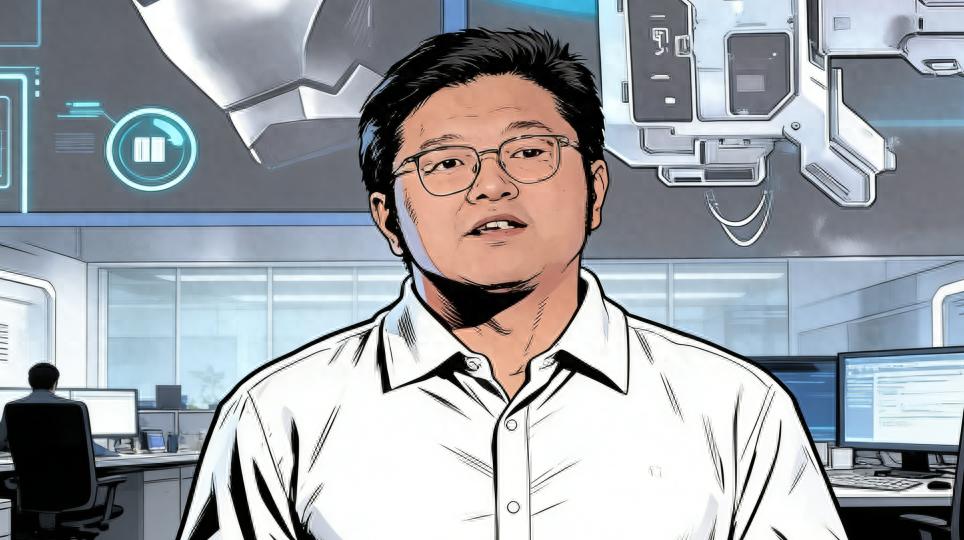
He is not Alibaba’s Zhou Hao, but rather Zhou Chang, who has been leading multimodal projects like Seedance at ByteDance.
During his seven years at Alibaba, Zhou Chang was the technical lead for the Tongyi Qianwen large model. Under his guidance, Qwen made its debut in April 2023, quickly rising to the forefront of global open-source large models.
Before leaving Alibaba in June 2024, he released Qwen2, which outperformed the then-leading open-source model Llama 3-70B. Within two hours of its release, it topped the Hugging Face open-source model leaderboard, surpassing many domestic closed-source models.
Today, the Qwen series has over 200,000 derivative models on Hugging Face, with cumulative downloads exceeding 1 billion, making it the most downloaded open-source model series globally. The release of Qwen3.5 in February this year secured the top four spots on the Hugging Face leaderboard, while the Tongyi Qianwen app reached 203 million monthly active users.
After leaving Alibaba in the summer of 2024, Zhou joined ByteDance’s Seed team. Within less than a year, he took over Seedream, Seedance, and the world model team, becoming the highest authority in Seed’s multimodal direction.
The subsequent story is well-known. On February 7, 2026, Seedance 2.0 launched quietly without a press conference or large-scale promotion, yet it ignited a frenzy in the global tech and capital markets within three days.
Chinese A-share short drama concept stocks surged, and Feng Ji, the producer of “Black Myth: Wukong,” described it as “the strongest video generation model on Earth, bar none.”
In the entire Chinese AI industry, it is hard to find another person with a career trajectory like Zhou Chang’s.
Zhou Chang: A Brief Biography
Zhou Chang graduated with a degree in Computer Science and Technology from Fudan University and later obtained a Ph.D. in Computer Software and Theory from Peking University after five years.
His doctoral research focused on deep learning, graph mining, and distributed computing, with over thirty papers published in top conferences. In July 2017, he joined Alibaba through campus recruitment, using the alias “Zhong Huang.”
New employees at large companies typically go through a “beginner’s village” phase. Zhou was initially assigned to the Damo Academy’s Intelligent Computing Laboratory as an algorithm expert, where his work was not directly related to large models.
He developed product image representation algorithms, user representation frameworks, and self-supervised contrastive learning vector recall algorithms, primarily serving Alibaba’s e-commerce recommendation and search scenarios.
 In retrospect, these years of accumulation were crucial for his later career trajectory.
On one hand, he completed large-scale engineering implementations in Alibaba’s core e-commerce business, learning how to deploy algorithms from the lab to real-world applications. On the other hand, he built a core team willing to follow him.
Around 2020, Zhou’s work direction began to shift. Alibaba’s Damo Academy launched a project called Multi-Modality to Multi-Modality Multitask Mega-transformer (M6). Zhou was a key participant in this project, co-authoring with Lin Junyang and Zhou Jingren, two names that frequently appear in the Qwen story.
In March 2021, M6 was officially released, featuring 100 billion parameters, making it the largest model in the global multimodal pre-training field at the time. Three months later, Damo Academy pushed M6 to the trillion-parameter level, significantly optimizing training efficiency.
Compared to models of similar scale, M6 reduced energy consumption by over 80% and improved efficiency by nearly 11 times. M6 achieved unified pre-training for multimodal data in Chinese scenarios, constructing a large-scale Chinese multimodal dataset of over 1.9TB of images and 292GB of text, covering various contexts like encyclopedias, web pages, and product descriptions.
This methodology was later directly applied to Alibaba’s e-commerce recommendation and content generation businesses, with derivative works like M6-Rec widely deployed within Alibaba Group.
The paper was published in top conferences like KDD 2021, co-authored by Zhou Chang, Lin Junyang, and Zhou Jingren. Importantly, M6 also served as the technical predecessor to Qwen in multimodal aspects.
In 2023, the global surge in large models triggered by ChatGPT prompted Alibaba to quickly integrate Damo Academy resources to establish the Tongyi Laboratory. Zhou led the development of the Tongyi Qianwen large model based on M6’s technology, serving as the technical lead and reporting directly to Alibaba Cloud CTO Zhou Jingren.
Over the next year, Zhou’s team first open-sourced Qwen-7B in August 2023, followed by the release of Qwen-VL visual language models, Qwen-Audio audio understanding models, CodeQwen code models, and Qwen1.5-MoE mixture of experts models, covering multiple modalities including text, vision, audio, and code.
In June 2024, just before Zhou’s departure, the Tongyi team released Qwen2, achieving significant success and enhancing Alibaba’s reputation in the open-source model community.
As of now, Zhou’s papers have been cited over 30,000 times, with the most cited being the Qwen2 technical report, which has over 8,000 citations. If academic papers were counted like WeChat articles, this one could be understood as having over 100,000 views.
By the time Zhou left, the cumulative downloads of the Tongyi Qianwen open-source model had surpassed 7 million. The success of Tongyi can be attributed to the technical foundation Zhou built, which continued from M6.
The Leader of Seed Multimodal
In July 2024, rumors circulated that Zhou Chang was about to leave to start his own venture. At that time, he was still within Alibaba’s cloud system and had not yet completed the formal process, but multiple independent sources confirmed his decision to leave. He signed a non-compete agreement upon departure.
Then, events unfolded unexpectedly. Just over two months later, in October, it was revealed that Zhou had quietly joined ByteDance—not to start his own company, but to switch to Alibaba’s most direct competitor.
ByteDance offered Zhou a 4-2 position level (some insiders claim his current level is 5-1) and an eight-figure annual package. Converted to Alibaba’s levels, this is roughly equivalent to jumping two levels with a salary increase of several times. Team members accompanying him also received levels of 4-1 and 3-2.
In November 2024, news broke that Alibaba had formally applied for non-compete arbitration, with insiders close to Tongyi confirming that “the situation is true.”
“The resignation to start a business was just a cover to avoid competition,” said a headhunter closely associated with ByteDance in a previous interview. “But this time, it couldn’t be hidden; not only Zhou Chang, but also more than ten team members followed him to ByteDance.”
As of March 2026, the final ruling of this labor arbitration, including compensation decisions and other core information, has not been publicly disclosed by the two AI giants or Zhou Chang himself. The labor arbitration case is subject to a statutory principle of non-public hearings, and neither party has released details of the case. What is confirmed is that after Alibaba initiated arbitration, the case has completed the legal process.
After joining ByteDance, Zhou was placed in the Seed team’s “Multimodal Interaction and World Model” department. Seed is ByteDance’s large model and fundamental research team, one of the company’s most valued AI businesses, aligning well with Zhou’s expertise.
In February 2025, the arrival of an important figure reshaped the Seed landscape. Former Google DeepMind research vice president and Google Fellow Wu Yonghui joined ByteDance as the head of Seed’s fundamental research, reporting directly to CEO Liang Rubo.
Wu, an alumnus of Nanjing University, had worked at Google for 17 years, leading the development of Google’s neural machine translation system GNMT and participating in the Gemini large model project.
Wu’s arrival restructured the reporting architecture of the Seed team, with several algorithm and technical leads reassigned to report to Wu, including Zhou Chang.
From later developments, it is evident that Wu valued Zhou Chang highly. In July 2025, ByteDance’s visual multimodal generation head Yang Jianzhao announced he would take a “temporary break.” Yang studied under Huang Xutao, known as the “father of computer vision,” and was responsible for text-to-image and text-to-video AI directions at ByteDance. Recent news indicates he is starting a venture in the video model field.
After his leave, Zhou officially took over this business. Shortly thereafter, visual foundational model research head Feng Ji also left the company.
With these two personnel changes, Zhou’s jurisdiction expanded from the original multimodal interaction and world model to encompass all visual AI products including text-to-image Seedream and text-to-video Seedance. He thus became the main leader in the multimodal direction of the Seed team.
Launching Seedance 2.0: A Global Sensation
After taking over the entire visual line, Zhou’s team brought the high-density output model from the Qwen era to Seed.
In the text-to-image direction, the team rapidly iterated Seedream from version 3.0 to 4.0 and then to 5.0. Seedream 3.0 achieved native 2K output and a three-second generation speed, while Seedream 4.0 pushed the resolution to 4K and unified the generation and editing architecture. The Seedream 5.0 released in February 2026 further introduced physical perception and semantic reasoning capabilities.
The achievements in the text-to-video direction were even more significant.
As mentioned at the beginning of the article, Seedance 2.0 launched quietly on February 7, 2026, yet its impact exceeded expectations.
Seedance 2.0 supports native 2K resolution, multi-camera narratives, four-modal input (text + image + video + audio), and multilingual lip-syncing, among other professional features.
Based on actual calculations, the production cost of a 5-second special effects shot can be reduced from 3,000 yuan (one month of labor) to 3 yuan (AI in two minutes).
The short drama industry has thus been transformed into the “AI short drama industry,” with DataEye estimating that, driven by AI technology’s cost reduction and efficiency improvements, the domestic short drama user base will grow from about 120 million in 2025 to 280 million in 2026.
Notably, recent news indicates that Yu Bowen, the former training head of the Qwen large model, has officially joined ByteDance as the post-training head of the visual model and multimodal interaction team in Seed.
This former Qwen team member is once again collaborating with Zhou Chang at Seed.
In fact, the Seed team has seen a steady influx of core team members from Alibaba’s related businesses in recent years, a trend that can be traced back several years before Zhou’s arrival.
For example, Huang Weilin, who was responsible for projects like Pailitao at Alibaba, left in 2020 to join ByteDance’s visual and multimodal research system; former Alibaba voice AI head Lu Lu joined ByteDance around 2022 to lead voice and multimodal large model research; and Ye Qinghao, who worked on document understanding and multimodal research at Damo Academy, left Alibaba around 2022 and is currently listed as a member of ByteDance’s Seed team.
Comments
Discussion is powered by Giscus (GitHub Discussions). Add
repo,repoID,category, andcategoryIDunder[params.comments.giscus]inhugo.tomlusing the values from the Giscus setup tool.