Post-ChatGPT 5.5: Codex Evolves into a Mini Team for Game Development
Recently, a small game called “Night Patrol: The Abandoned Temple” has gained popularity in the AI community.
This is not just a toy project where AI writes a few lines of code, nor is it a half-finished demo that can only be clicked through in a browser. It features a title page, a map route, normal battles, elite battles, events, shops, and even a final boss fight. The theme is based on Chinese folklore.
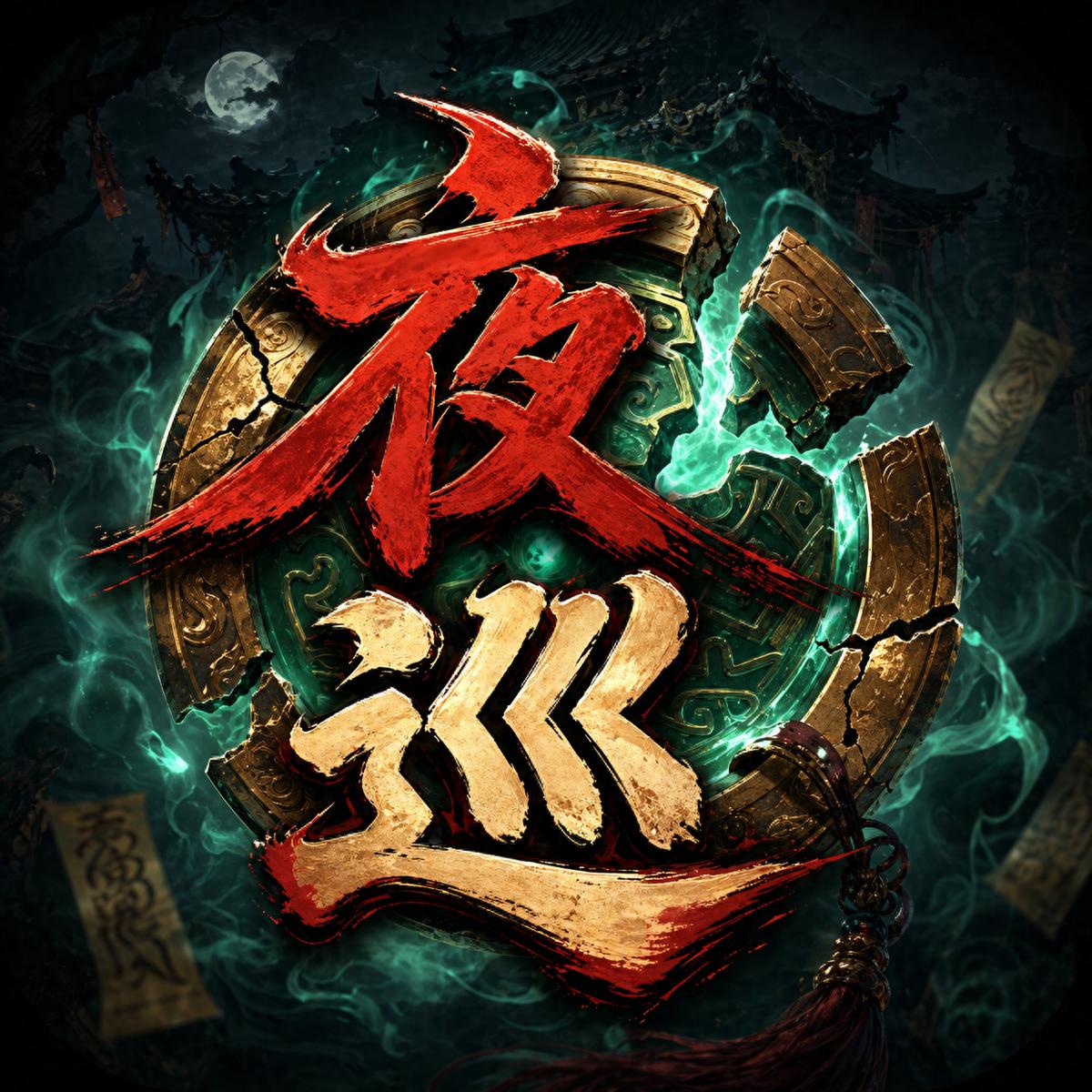 Logo from the open-source project
The gameplay is inspired by the well-known roguelike card game “Slay the Spire”: drawing cards, playing cards, stacking statuses, acquiring relics, removing cards, and upgrading, then rolling out the construction.
More importantly, its development method is quite representative. The author primarily relied on Codex to advance the code and engineering. Material generation was facilitated by Codex integrating GPT-Image 2.0. Coupled with tools for AI video, AI music, and AI sound effects, the project progressed from an idea in the author’s mind to a downloadable demo.
If previously AI writing code felt more like a “high-level autocomplete,” after ChatGPT 5.5, Codex’s integration with Image-2 makes it seem increasingly like a “mini outsourcing team” working alongside the developer. This team is not just capable of writing code.
The Challenges of Game Development
In the past, many aspiring game developers often thought not about how to design gameplay, but rather:
I can’t do art. I can’t do music. I can’t do animation. I can’t package it. I don’t know how to set up the engineering.
Even if you know a bit of coding, you can quickly be discouraged by a myriad of questions:
Where do I find character illustrations? How do I create card borders? What style should the monster graphics be? How do I unify UI materials? How do I connect battle animations? Where do I get sound effects and background music? How do I package it into a client?
Each of these tasks, when viewed individually, isn’t particularly mysterious. But when stacked together, they form a high wall.
In the past, creating a somewhat complete game often required a small team with distinct roles: programming, art, UI, audio, planning, testing, and publishing. While one person can certainly do it, the time cost is very high, and it’s easy to get stuck at some stage and abandon the project.
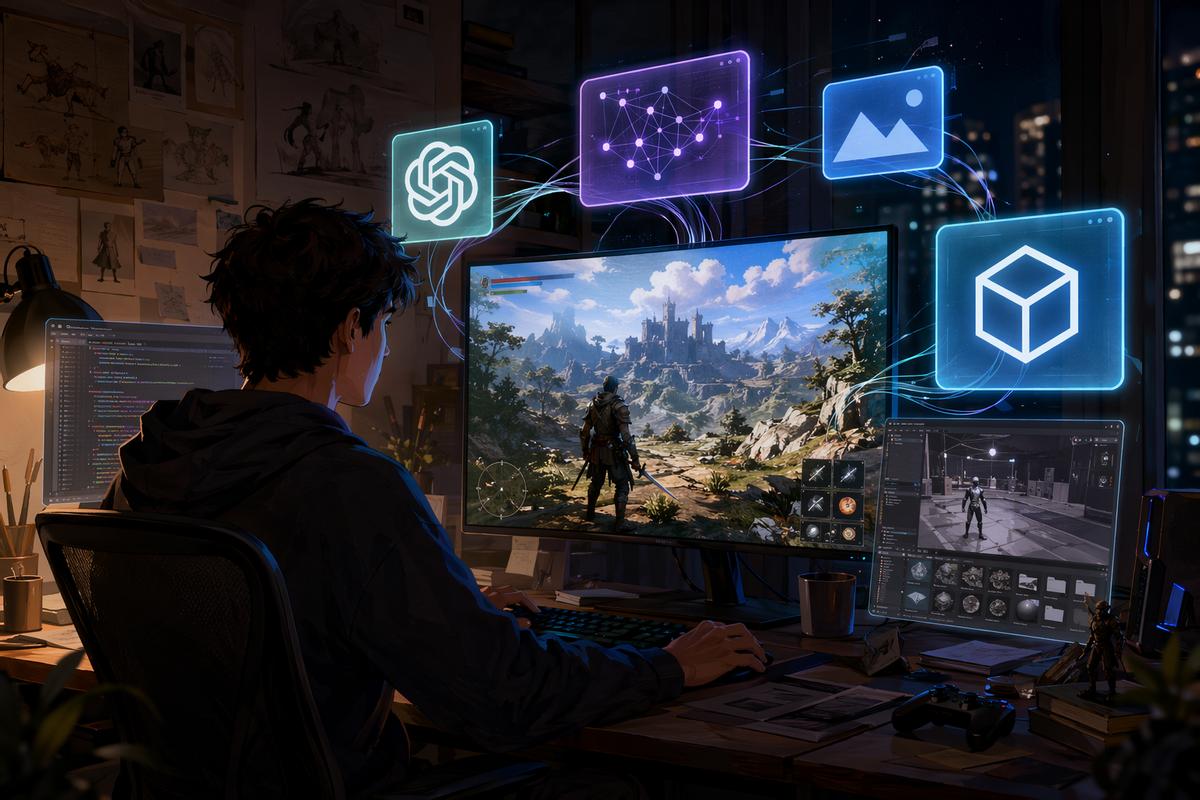 One-person team in the AI era
The interesting aspect of the “Night Patrol” case is that it delegates many tasks that previously required human effort to Codex. The author simply provided a broad direction:
Similar to “Slay the Spire.”
The theme is Chinese folklore.
Then Codex could start pushing towards a complete project.
This marks the most noticeable change: AI is no longer just answering questions; it begins to break down tasks, find tools, write scripts, organize files, and integrate engineering after understanding the goals.
Material Generation No Longer a Major Roadblock
What is the biggest fear in game development?
Often, it is not a lack of ideas, but rather that as soon as an idea is conceived, the first piece of art can block progress.
In “Night Patrol,” there is an interesting detail. When the author asked Codex to call Image-2 to generate character materials, they didn’t even specify the style, type of monster, or background in great detail. The result was that the generated character images automatically stood against a pure green background.
This is quite subtle. It indicates that Codex is not just about “generating a good image.” It considers: how this image will be integrated into the game project.
Furthermore, the task of extracting the image was not done manually by the author. Codex researched tools, installed them, adjusted parameters, processed the materials, and categorized them into the appropriate directories. This significantly shortened the development process.
The key point here is not how well the AI can draw, but that it connects material production with engineering integration. This step was previously very labor-intensive. Now, AI is taking over.
Codex’s True Power: Handling Tedious Tasks
Many underestimate the tedious tasks involved in game development, such as resource management. The author provided Codex with a material package containing thousands of images, with file names like ui_001.png, which have no semantic meaning. Browsing through them manually is painful, and even AI would consume a lot of context looking through them.
So, what did Codex do? It wrote a script to automatically arrange the small images from the folder into a large grid image, labeling each image with its original file name. This way, it only needs to look at one large image to scan dozens or even hundreds of materials at once. If it finds something interesting, it can reference the original folder using the file name.
In the past, if you asked AI:
Help me write a battle system.
It would give you a piece of code. Now, if you say:
I want to create a Chinese folklore card roguelike.
It might help you set up a React, Phaser, TypeScript project, write maps, cards, enemies, status mechanisms, and integrate materials, music, animations, and packaging processes. This is no longer just “code completion.” It resembles a development assistant capable of executing tasks continuously.
A Complete Demo in One Afternoon: The Emergence of Full Process Automation
From the GitHub project, it appears that “Night Patrol: The Abandoned Temple” already has a complete first-level vertical slice demo. A “vertical slice demo” can be understood simply as:
It doesn’t complete all content but creates a small segment of the entire process for players to experience from start to finish.
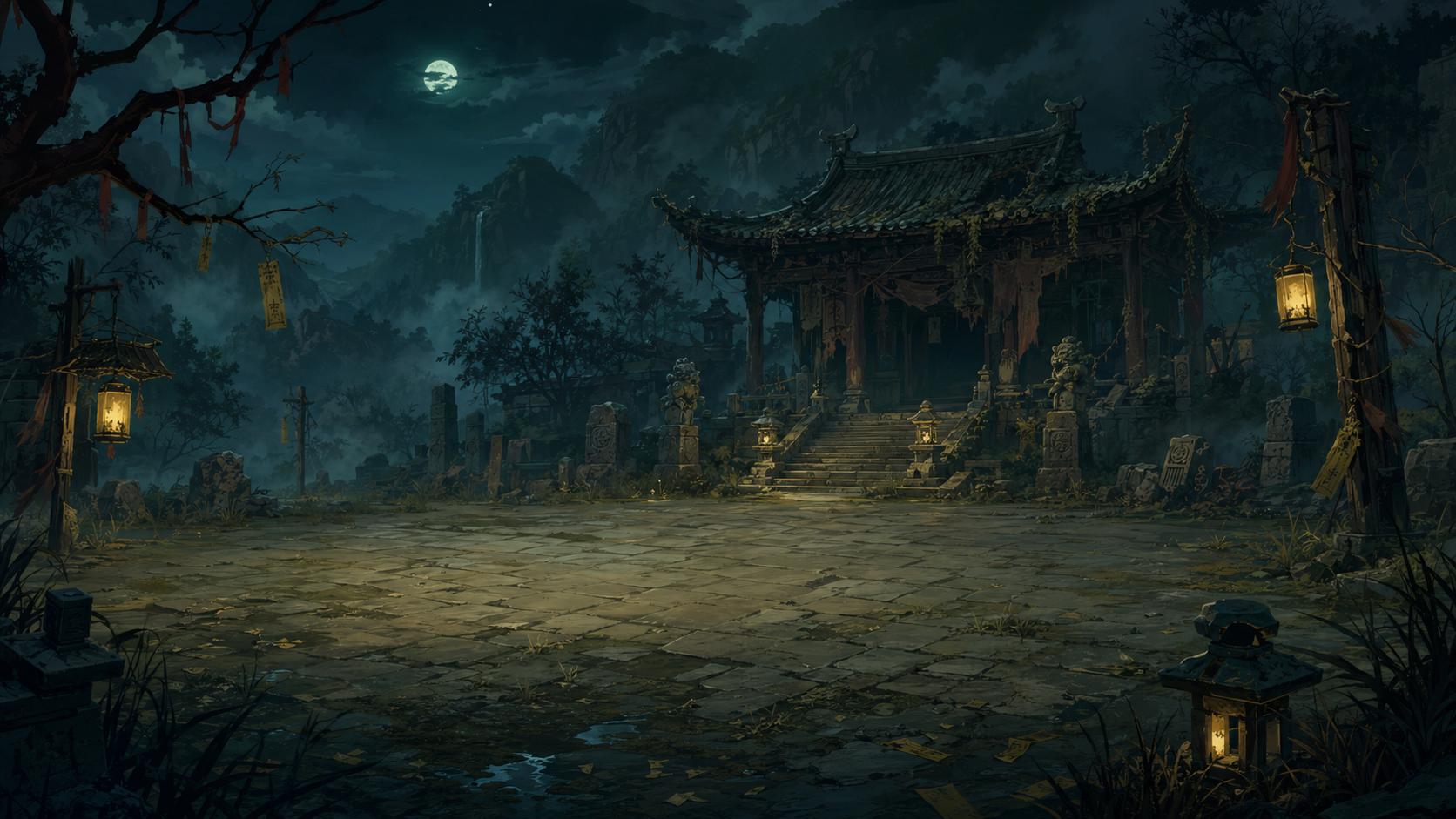 Battle background in “Night Patrol”
It includes:
1 main character;
About 20 cards;
Various enemies like Lantern Spirit, Water Ghost, Temple Priest Corpse, Mountain Demon, Black Altar Sorcerer, Shadow Puppet, Mountain Lord;
Keywords like talismans, incense, block, weakness, vulnerability, spells, and consumption;
Normal battles, elite battles, boss battles;
Strange events, shadow market shops, rest, card removal, upgrades;
Plus background music, attack sound effects, skill sound effects, UI sound effects, and victory settlement videos.
The technology stack is also not randomly assembled:
React handles complex UI.
Phaser manages the battle stage.
TypeScript controls game states.
Vite is used for development builds.
Electron packages the desktop app.
GitHub Actions automatically builds Mac and Windows clients.
These terms may sound a bit technical, but they simply mean:
This project is not just a small toy. It has been organized in a relatively modern way for front-end and desktop applications.
For individual developers, this is a significant improvement. You no longer need to become a full-stack engineer, then an artist, then an audio engineer, and finally learn about publishing and packaging. You can first clarify your ideas and let Codex help you get the first version up and running. After it is running, you can direct the project, adding details and modifying experiences.
The First Beneficiaries: Those with Ideas but No Teams
What is most noteworthy is not whether “Night Patrol” itself is a commercially viable product. Rather, it proves a point:
A person with aesthetic sense, judgment, and expression can now use Codex and Image-2 to advance a game prototype to a fairly complete stage.
In the past, the barrier to making games was:
Can you implement it?
In the future, the barrier to making games might be more like:
Do you know what you want?
As AI becomes more powerful, human aesthetic and product judgment become increasingly important.
Not a One-Click Path to Masterpieces
However, let’s not mythologize this process. While AI can quickly create demos, commercial games still face many issues:
Copyright;
Material consistency;
Performance optimization;
Balance of values;
User testing;
Platform review;
Paid design;
Version maintenance.
None of these can be solved with a single click.
The Real Change: Game Creation Enters the Era of “Just Clarify and Start”
The greatest significance of ChatGPT 5.5 combined with Codex and Image-2 is not merely to reduce the lines of code programmers need to write. Instead, it compresses the entire game creation chain:
From idea to visuals;
From visuals to code;
From code to playable version;
From playable version to desktop client.
This path was once long. Now, it is being shortened to a matter of hours or days by AI.
This signals a new era for independent developers, content creators, game planners, and even players who do not know how to code:
In the future, making games may no longer require:
First, assemble a team, then start a project.
Instead, it may be:
First, create a prototype, then decide whether to assemble a team.
With Codex, game ideas can be validated more quickly. With Image-2, characters and scenes are no longer stuck at the first step. With automation scripts and engineering capabilities, tasks like material management, UI, sound effects, and packaging can also be quickly integrated.
Comments
Discussion is powered by Giscus (GitHub Discussions). Add
repo,repoID,category, andcategoryIDunder[params.comments.giscus]inhugo.tomlusing the values from the Giscus setup tool.